
Social Media Marketing Strategy 2026: How to Generate High-Quality Leads
A practical guide to building a modern social media marketing strategy in 2026, attracting the right audience and turning social media engagement into high-quality leads through content, paid campaigns, lead nurturing and conversion optimization.
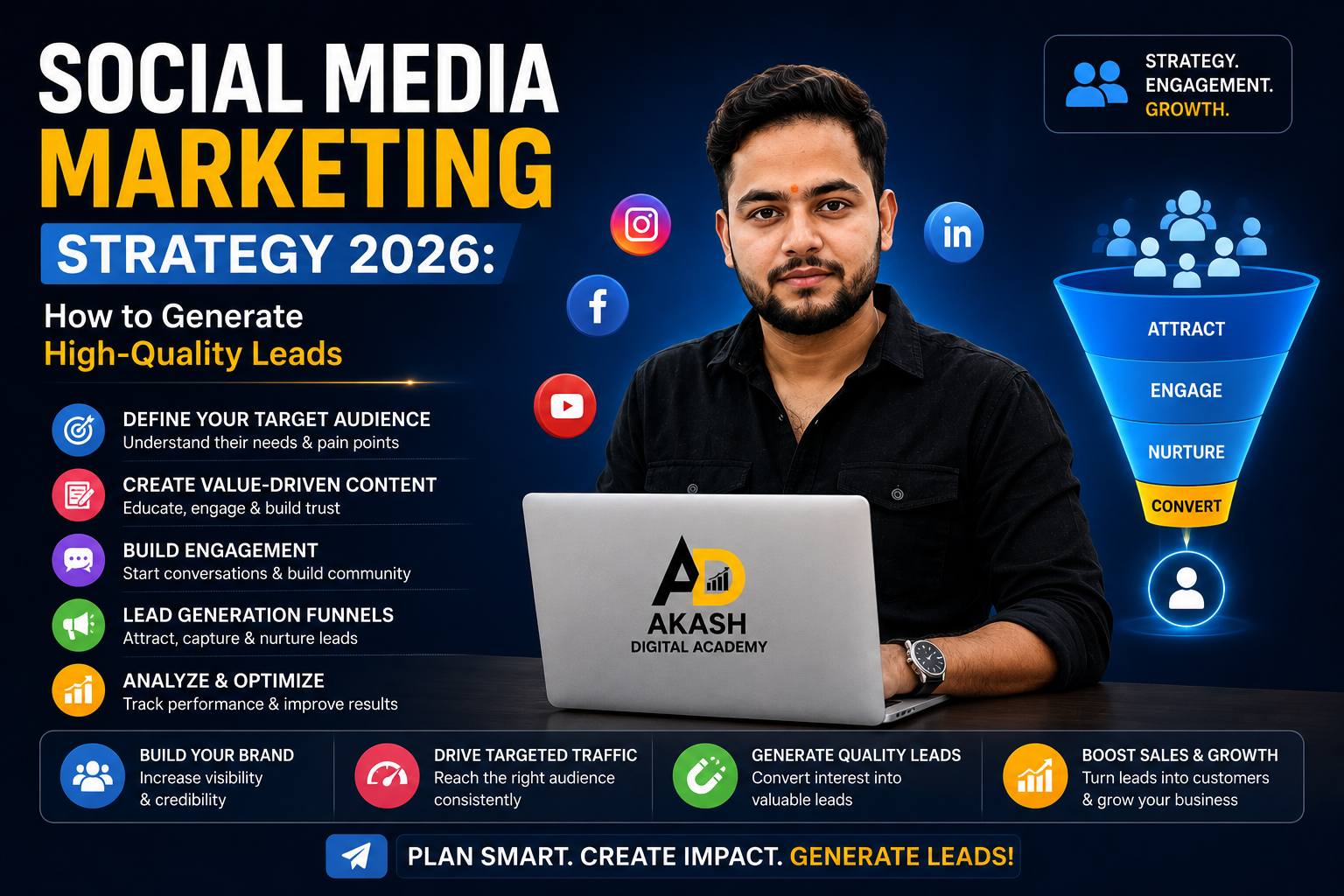
What Is the Best Social Media Marketing Strategy in 2026?
The best social media marketing strategy in 2026 is a customer-focused system that combines useful content, platform-specific targeting, community engagement, paid advertising, lead capture, follow-up and conversion optimization. The goal is not simply to gain followers—it is to attract relevant prospects and turn them into qualified leads and customers.
Social media has evolved from a platform for brand awareness into an important part of the modern digital marketing funnel. Businesses now use platforms such as Instagram, Facebook, LinkedIn and YouTube to reach audiences, educate prospects, build trust and generate business enquiries.
But simply posting every day does not automatically generate high-quality leads. A successful social media lead generation strategy requires the right audience, valuable content, clear offers, effective calls-to-action and a process for converting attention into measurable business results.
In this guide, we will break down a practical social media marketing strategy for 2026 that businesses can use to improve lead generation, audience engagement, brand visibility and conversion rates.
Targeted Reach
Reach audiences based on interests, behaviour, demographics, profession and business needs.
Better Content
Create educational, problem-solving and conversion-focused content instead of random promotional posts.
Lead Generation
Use landing pages, lead forms, messages and calls-to-action to capture genuine prospects.
Measurable Growth
Track clicks, leads, cost per lead, conversion rates and revenue-related outcomes.
Why Social Media Lead Generation Matters in 2026
People increasingly discover brands, products, services and businesses through digital platforms. This makes social media marketing an important touchpoint throughout the customer journey.
A strong social media strategy can help businesses create awareness at the top of the funnel, educate potential customers in the middle of the funnel and encourage enquiries or purchases at the bottom of the funnel.
The most important shift is moving from a follower-first strategy to a customer-first strategy. A smaller audience with strong relevance and buying intent can be more valuable than a large audience that never converts.
Define Your Ideal Customer Before Creating Content
Before building your social media marketing campaign, identify who you actually want to attract. Your content should be designed around the problems, goals, questions and buying behaviour of your ideal customer.
- Who is your target customer?
- What problem are they trying to solve?
- Which social platforms do they use?
- What type of content do they consume?
- What objections stop them from buying?
- What would make them contact your business?
Choose the Right Social Media Platforms
You do not need to be equally active on every platform. The right choice depends on your target audience, business model, content format and marketing objective.
Instagram & Facebook
- Visual brand storytelling
- Short-form video content
- Community building
- Local business promotion
- Paid social campaigns
LinkedIn & YouTube
- B2B lead generation
- Professional expertise
- Educational content
- Long-form video
- Search-driven discovery
Build a Content Strategy Around Customer Intent
Your content should move people from awareness to consideration and eventually toward action. Instead of publishing only promotional content, create a balanced content mix.
Educational Content
Answer common questions, explain concepts, share tutorials and help prospects understand how your service solves a problem.
Authority Content
Use case studies, insights, examples, processes and expert explanations to demonstrate knowledge.
Conversion Content
Showcase your service, explain benefits, address objections and provide a clear next step such as booking a consultation, requesting information or visiting a service page.
Use Short-Form Video for Discovery
Short-form video can be useful for reaching new audiences and communicating ideas quickly. The important point is not simply creating videos—it is creating videos that solve a problem or answer a question relevant to your target customer.
- Start with a clear problem or hook.
- Deliver useful information quickly.
- Use simple language.
- Show examples where possible.
- Finish with a relevant call-to-action.
Create Lead Magnets and Strong Calls-to-Action
A visitor may like your content but still not be ready to buy. Lead magnets and useful resources can give prospects a reason to take the next step.
Examples include:
- Free consultation
- Marketing checklist
- Free audit
- Industry guide
- Free strategy session
- Course information
- Downloadable resource
Every campaign should have a clear objective and a logical call-to-action. Avoid sending every visitor to the homepage if a dedicated landing page would provide a more relevant experience.
Build a Social Media Lead Generation Funnel
A strong social media campaign connects content, attention, lead capture and follow-up rather than treating every post as an isolated activity.
Organic vs Paid Social Media Marketing
Both organic social media marketing and paid social advertising can contribute to a lead generation strategy. The right balance depends on your objectives, budget, audience and sales cycle.
Organic Social Media
- Build long-term audience trust.
- Share educational content.
- Develop brand authority.
- Engage with your community.
- Generate repeat discovery.
Paid Social Advertising
- Reach targeted audiences.
- Test different offers.
- Scale successful campaigns.
- Retarget interested visitors.
- Measure campaign-level performance.
How to Generate High-Quality Leads Instead of Just More Leads
One of the biggest mistakes in social media lead generation is optimizing only for lead volume. A campaign can produce hundreds of enquiries and still perform poorly if those enquiries are not relevant to the business.
Improve Lead Quality With Better Targeting
Use audience targeting, relevant messaging and clear service positioning to attract people who actually need your offer.
Use Qualification Questions
For appropriate campaigns, ask questions that help determine whether a prospect is a genuine fit.
Match the Offer to Customer Intent
A person watching an educational video may not be ready for a sales call. Give them a logical next step based on their stage in the buying journey.
Social Media Conversion Optimization
Generating traffic is only one part of the process. Your landing page, form, WhatsApp or phone enquiry process and follow-up experience also influence whether social media traffic becomes a business opportunity.
- Keep the landing page message consistent with the advertisement.
- Explain the value proposition clearly.
- Use one primary conversion goal.
- Make contact options easy to find.
- Remove unnecessary form fields.
- Build trust with genuine information and proof.
- Track conversions instead of vanity metrics alone.
Social Media Marketing Metrics to Track in 2026
Your analytics should connect social media activity with actual marketing objectives. Likes and followers can be useful indicators, but they should not be the only metrics you monitor.
Engagement Metrics
- Engagement rate
- Comments
- Shares
- Saves
- Video retention
- Profile visits
Lead & Business Metrics
- Website clicks
- Qualified leads
- Cost per lead
- Landing page conversion rate
- Lead-to-customer rate
- Revenue attributed to campaigns
Social Media Marketing for Local Businesses
Local businesses can combine social media marketing with local SEO and Google Business Profile optimization to create a stronger digital presence.
For example, a local business can publish location-relevant content, showcase real customer experiences, highlight services, answer local questions and direct interested users toward its website or business profile.
The objective should be genuine local relevance rather than repeating a city name unnaturally across every post.
Social Media Marketing Strategy 2026: A Practical Framework
- Define your ideal customer and business objective.
- Select the platforms where your audience is active.
- Build content pillars around customer problems and intent.
- Create educational, authority and conversion content.
- Use short-form video and visual content for discovery.
- Develop lead magnets and relevant calls-to-action.
- Use paid campaigns when they support a clear business goal.
- Build a landing page and lead capture process.
- Follow up and nurture qualified prospects.
- Measure leads, conversions and business outcomes.
- Improve campaigns based on real performance data.
Social Media Lead Generation Checklist
- Define your ideal customer.
- Choose the right social media platforms.
- Create clear content pillars.
- Publish useful educational content.
- Use short-form video strategically.
- Create conversion-focused posts.
- Add clear calls-to-action.
- Use relevant landing pages.
- Build lead capture opportunities.
- Follow up with prospects.
- Track qualified leads.
- Measure cost per lead.
- Monitor conversion rates.
- Test different creatives and offers.
- Improve campaigns using performance data.
Explore Our Digital Marketing Services & Courses
Want to improve your social media marketing skills or get professional digital marketing support? Explore these related resources from Akash Digital Academy.
Related Digital Marketing Resources
Useful Official Digital Marketing Resources
- Meta for Business — official resources for businesses using Facebook and Instagram.
- LinkedIn Marketing Solutions — official business and advertising resources from LinkedIn.
- Google Analytics Help — official documentation for measurement and analytics.
- Google Search Central SEO Starter Guide — official Google guidance for search optimization.
What Is Social Media Lead Generation?
Social media lead generation is the process of using social platforms to attract potential customers and convert their interest into measurable enquiries, registrations, consultations or other business leads.
Which Social Media Platform Is Best for Lead Generation?
There is no single platform that is best for every business. The right platform depends on the target audience, industry, content format, sales process and marketing objective. Businesses should focus on the platforms where their potential customers actually spend time.
How Can Small Businesses Generate Leads From Social Media?
Small businesses can generate leads by identifying a specific target audience, creating useful content, using clear calls-to-action, building landing pages or enquiry systems and following up with qualified prospects. Local businesses can also combine social media marketing with local SEO and Google Business Profile optimization.
Frequently Asked Questions About Social Media Marketing Strategy
What is the best social media marketing strategy in 2026?
A strong strategy combines audience research, useful content, platform-specific execution, organic engagement, paid advertising where appropriate, lead capture, nurturing and conversion measurement.
How do I generate high-quality leads from social media?
Define your ideal customer, create relevant content, target the right audience, use a strong offer and call-to-action, send users to a relevant conversion page and qualify and follow up with leads.
Is social media marketing good for small businesses?
Yes. Small businesses can use social media to build awareness, engage local or niche audiences, demonstrate expertise and generate enquiries when the strategy is aligned with business goals.
Should I focus on followers or leads?
For a lead-generation campaign, qualified leads and business outcomes should generally receive more attention than follower count alone. Audience growth is useful when it contributes to relevant reach, engagement and future customer opportunities.
Is paid social media better than organic marketing?
Paid and organic social media serve different purposes. Organic content can build trust and long-term visibility, while paid campaigns can help businesses reach targeted audiences and test offers more quickly. Many businesses can benefit from combining both.
How often should a business post on social media?
There is no universal posting frequency that guarantees results. A sustainable schedule with useful, consistent and audience-relevant content is generally more valuable than posting frequently without a clear strategy.
How can I measure social media lead generation?
Track website clicks, leads, qualified leads, cost per lead, landing-page conversion rate, lead-to-customer rate and other business outcomes alongside engagement metrics.
Ready to Build a Lead-Focused Social Media Strategy?
Turn social media activity into a structured marketing system with the right audience, content strategy, lead generation, conversion optimization and digital marketing skills.