
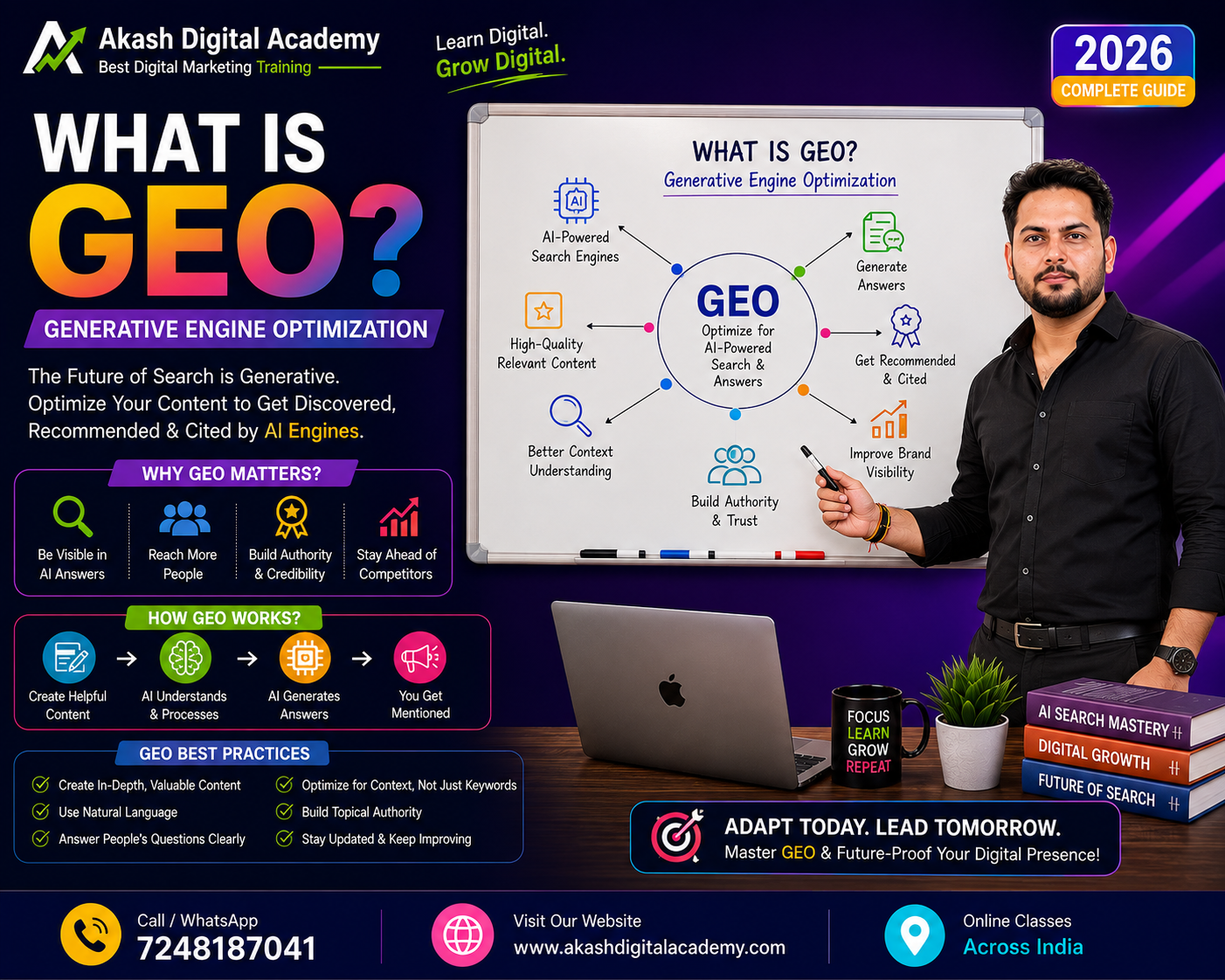
What Is GEO? Generative Engine Optimization Guide 2026
Learn how Generative Engine Optimization (GEO) works, how AI-powered search changes content discovery, and how businesses can create useful, authoritative content for modern search experiences.
What Is Generative Engine Optimization?
Generative Engine Optimization (GEO) is a content and search strategy focused on making information clear, useful, authoritative and easier for AI-powered search systems to understand, retrieve and potentially reference.
GEO does not replace traditional SEO. Strong fundamentals such as crawlable pages, useful content, descriptive links, logical site structure and good user experience remain important foundations for search visibility. :contentReference[oaicite:2]{index=2}
What Is GEO in Digital Marketing?
GEO stands for Generative Engine Optimization. It describes the process of preparing useful digital content so that modern AI-powered search and answer experiences can better understand the information, context and relationships within that content.
Traditional SEO focuses heavily on helping search engines discover, understand and rank webpages. GEO expands the conversation toward how information can be interpreted and used in generative search experiences.
For marketers, the practical goal should not be simply to "write for AI." The goal is to create genuinely useful, well-structured, trustworthy information that serves people first and can also be understood by search systems.
Why Is GEO Becoming Important in 2026?
Search is becoming more conversational and increasingly includes AI-generated answers, summaries and other AI-assisted discovery experiences. This changes how users can find information and how brands need to think about content visibility.
Instead of optimizing only for one exact keyword, marketers can build content around a complete topic, related concepts, entities, questions and user intent.
GEO vs SEO: What Is the Difference?
| SEO | GEO |
|---|---|
| Focuses on search visibility and organic discovery. | Focuses on visibility and understanding in generative search experiences. |
| Keywords, content, links and technical accessibility. | Context, entities, useful answers, authority and clear information structure. |
| Traditional search result pages. | AI-powered answers and conversational discovery. |
| Search intent remains important. | Search intent and conversational context remain important. |
GEO vs AEO vs SEO
You may also hear terms such as AEO (Answer Engine Optimization) and GEO. These concepts overlap, but they are often used to describe different approaches to search visibility.
SEO
Search Engine Optimization focuses on helping search engines discover, understand and surface useful webpages.
AEO
Answer Engine Optimization focuses on structuring information so direct questions can be answered clearly.
GEO
Generative Engine Optimization focuses on content visibility and understanding within generative AI search experiences.
How Does Generative Engine Optimization Work?
A practical GEO strategy starts with understanding the audience and the questions they ask. From there, content should provide clear explanations, supporting evidence, useful examples and logical relationships between topics.
1. Understand Search Intent
Identify what the user is actually trying to accomplish. A person searching "what is GEO" needs an explanation, while someone searching "GEO agency" may have commercial intent.
2. Build Topic Depth
Instead of creating dozens of disconnected pages, build useful content around related concepts such as SEO, semantic SEO, AI search, AEO, content strategy, entities, search intent and digital marketing.
3. Use Clear Information Architecture
Organize your website logically using descriptive headings, categories and internal links. Google recommends logical site organization and descriptive internal anchor text. :contentReference[oaicite:4]{index=4}
4. Demonstrate Expertise
Add original explanations, practical examples, experience, useful data and clear authorship where appropriate. Helpful, reliable and people-first content is a core part of Google's current guidance. :contentReference[oaicite:5]{index=5}
5. Answer Related Questions
Cover important supporting questions naturally rather than repeating the same keyword. Google's language systems can understand relationships between concepts and variations in how users search. :contentReference[oaicite:6]{index=6}
Semantic SEO and GEO
Semantic SEO is especially useful when building GEO-focused content because both approaches benefit from understanding topics and relationships rather than repeating a single keyword.
For example, a GEO article can naturally discuss AI search, generative search, search engines, language models, search intent, entities, content quality, structured information, SEO, AEO and digital marketing.
The objective is not keyword stuffing. Each concept should appear because it helps the reader understand the main topic.
How to Optimize Content for AI Search
- Answer the primary question early.
- Use descriptive H2 and H3 headings.
- Explain important concepts in simple language.
- Cover related questions and entities naturally.
- Use examples where they improve understanding.
- Support important claims with trustworthy sources.
- Use descriptive internal links.
- Keep important content accessible to search crawlers.
- Maintain a logical website architecture.
- Create content primarily for people rather than search engine manipulation.
Internal Linking Strategy for GEO
Internal links are particularly useful for connecting related content into a coherent topic cluster. Google explains that internal links help users and search engines understand site relationships and discover important pages. :contentReference[oaicite:7]{index=7}
For example, this GEO article can connect naturally with your existing SEO guide, AI tools content, local SEO content and digital marketing strategy articles.
GEO Content Cluster for Digital Marketers
A strong content cluster can connect the following subjects:
- SEO fundamentals
- Semantic SEO
- Generative Engine Optimization
- AI Search
- Answer Engine Optimization
- AI marketing tools
- Content marketing
- Local SEO
- Digital marketing strategy
- SEO courses and digital marketing training
Learn SEO, AI & Digital Marketing Practically
If you want to develop practical digital marketing skills, explore the professional training programs available at Akash Digital Academy.
SEO & SEO Strategy
Learn keyword research, on-page SEO, technical SEO, semantic SEO, local SEO and content optimization.
Explore SEO Training & Services →Professional Digital Marketing Course
Learn SEO, PPC, Google Ads, social media, content, WordPress, analytics, AI and lead generation.
View Professional Course →Advanced Digital Marketing Course
Build advanced skills across SEO, semantic SEO, PPC, local SEO, social media, analytics and AI marketing.
View Advanced Course →Professional Digital Marketing Services
Businesses can also explore professional implementation services for SEO, PPC and social media marketing.
SEO Services
Improve organic visibility, content optimization and local search presence.
Explore SEO Services →Google Ads & PPC
Reach relevant audiences through targeted paid search campaigns.
Explore Marketing Services →Social Media Marketing
Build social visibility, content strategy and audience engagement.
Explore SMM Services →Official Resources for SEO & AI Search
For SEO fundamentals, website organization, crawlability, internal linking and search best practices, refer to Google Search Central's SEO Starter Guide . :contentReference[oaicite:8]{index=8}
You can also use Google's link best-practices documentation to understand crawlable links and descriptive anchor text. :contentReference[oaicite:9]{index=9}
For monitoring search performance and indexing, Google Search Console is an important resource for website owners and SEO professionals. :contentReference[oaicite:10]{index=10}
Want to Master SEO, AI & Digital Marketing?
Learn practical SEO, semantic SEO, Google Ads, social media, content marketing, analytics, AI marketing and modern digital marketing strategies.
Frequently Asked Questions About GEO
What is GEO in digital marketing?
GEO stands for Generative Engine Optimization. It refers to strategies for creating clear, useful and authoritative content that can be better understood within generative AI search experiences.
What is the difference between SEO and GEO?
SEO focuses on improving organic search visibility and helping search engines discover and understand webpages. GEO focuses on content visibility and understanding in generative search experiences. The two approaches overlap and strong SEO fundamentals remain important.
What is Generative Engine Optimization?
Generative Engine Optimization is a content strategy focused on making information useful, clear, authoritative and easier for generative AI systems to understand and potentially use in answers.
How can I optimize my website for AI search?
Start with people-first content, clear site architecture, descriptive headings, useful answers, strong internal linking, relevant supporting topics, trustworthy sources and technically accessible webpages.
Is GEO replacing SEO?
No. GEO should not be treated as a replacement for SEO. Crawlability, indexing, useful content, internal links, descriptive URLs and a logical website structure remain important search fundamentals.
Start Your Digital Marketing Journey
Build practical skills in SEO, semantic SEO, AI marketing, Google Ads, social media marketing, content marketing, analytics and lead generation.
Explore Professional Digital Marketing Course